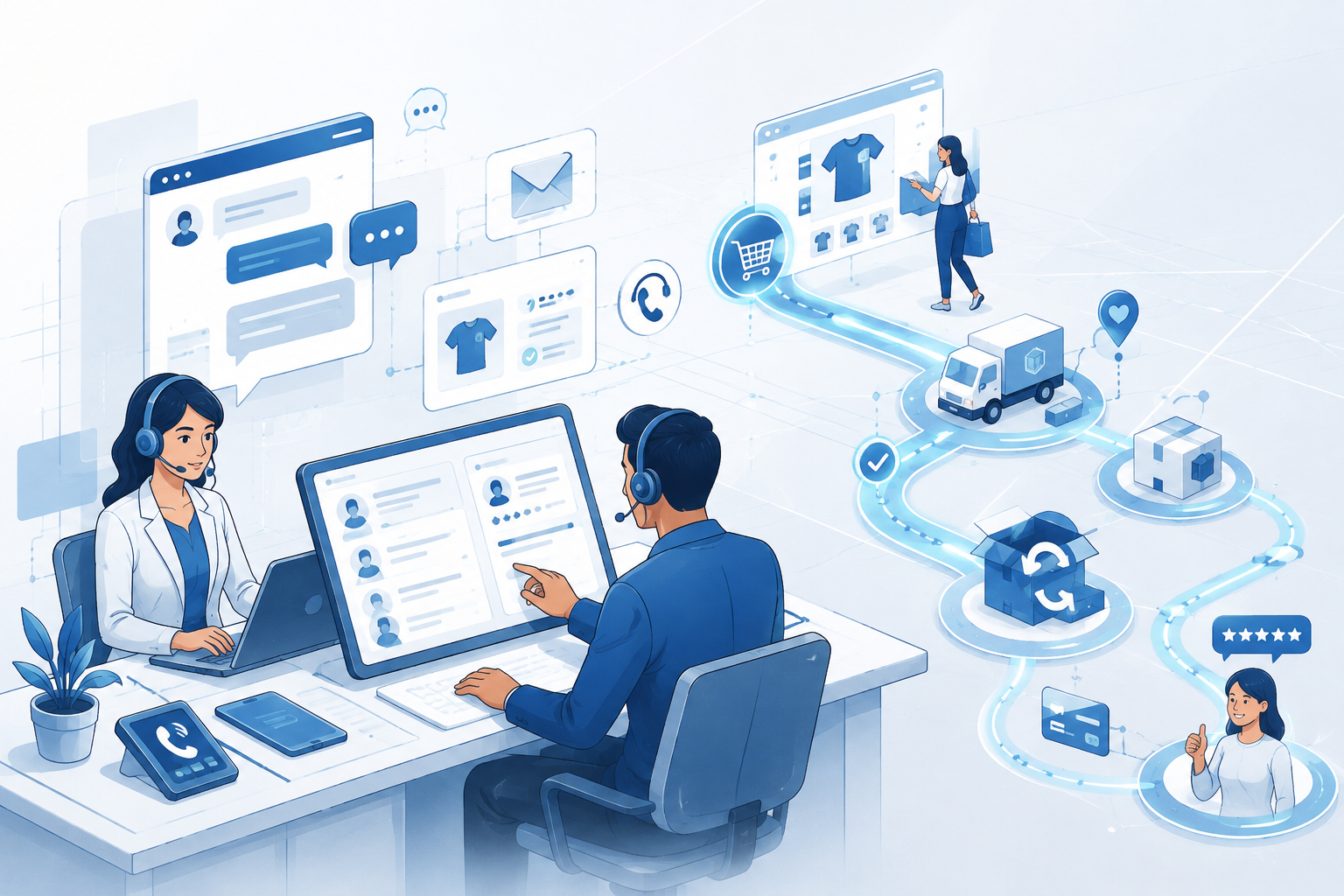
E commerce customer service is the process of helping shoppers before, during and after an online purchase through accurate information, responsive support and coordinated order resolution. Strong service connects customer conversations with product, order, payment, delivery and return records so an issue can be solved without forcing the customer to repeat the same details across channels.
Online retail separates the customer from the product, warehouse, payment process and delivery operation. A customer may only see a product page, an email and a tracking link, but the final experience depends on several systems and teams working together. Customer service becomes the layer that explains what happened, corrects failures and protects trust when the normal process breaks.
The goal is not simply to answer quickly. Effective support reduces uncertainty, completes a defined action and leaves a record that other employees can understand.
What Is E-Commerce Customer Service?
E-commerce customer service includes every support process connected to online product discovery, ordering, payment, fulfillment, returns, refunds, accounts and post-purchase use. It may be delivered through email, chat, phone, messaging, social media, self-service pages, store teams or a dedicated contact centre.
The service function normally handles questions such as:
- Which product, size or configuration is suitable?
- Was the payment completed or only authorized?
- Can an order be changed or cancelled?
- Why has a shipment not moved?
- How can a product be returned or exchanged?
- When will a refund reach the original payment method?
- How can an account, subscription or warranty issue be corrected?
Customer service is most effective when the support team can see the same commercial facts used by the store, warehouse and finance teams.
Customer Service, Support, Experience and Journey
| Term | Meaning | Practical Example |
|---|---|---|
| Customer service | The complete process of helping customers and resolving commercial issues | Changing an address, investigating delivery and arranging a refund |
| Customer support | Assistance with a specific product, account or transaction problem | Resetting access or diagnosing why a digital product will not activate |
| Customer experience | The customer’s total perception of interactions with the business | How clear, reliable and fair the purchase feels from discovery to return |
| Customer journey | The sequence of customer actions and business touchpoints | Search, product comparison, checkout, delivery, support and repeat purchase |
| Contact centre | A coordinated operation that manages customer contacts across one or more channels | Agents handling chat, phone, email and messaging through shared workflows |
E-commerce customer support is one part of the broader service system. E-commerce customer experience includes support but also depends on product information, website usability, payment reliability, delivery accuracy and return policies. The e-commerce customer journey shows where those experiences occur and where support demand is created.
Why Customer Service Matters in Online Retail
Service demand is not a rare exception. Eurostat reported that 35.4% of EU online shoppers encountered a problem when purchasing through a website or app in a 2025 survey. Slow delivery was the most frequently reported issue, and some shoppers also reported difficulty with complaints and redress.
The commercial impact is wider than the original ticket. A delayed order can produce several contacts, a payment dispute, a cancellation, a negative review and the loss of a repeat customer. One operational failure can therefore create support cost, refund cost and acquisition replacement cost.
E commerce customer experience data also reveals problems that dashboards may hide. A product can have a normal conversion rate while generating repeated questions about sizing. A carrier can appear to meet average delivery targets while causing severe delays in one region. Support records provide qualitative evidence that should be connected to order and product data.
The Six-Record Service Model
A useful service operation connects six records. This model prevents agents from treating a customer message as an isolated conversation.
| Record | What It Contains | Why It Matters |
|---|---|---|
| Customer record | Identity, contact details, consent and account history | Confirms who is requesting the action |
| Order record | Items, quantities, prices, status and fulfillment method | Shows what the business promised and sold |
| Payment record | Authorization, capture, settlement, chargeback and refund status | Separates financial state from order state |
| Fulfillment record | Picking, shipment, carrier events, pickup and delivery evidence | Explains where the product is physically located |
| Communication record | Messages, commitments, attachments and previous decisions | Prevents repetition and conflicting answers |
| Policy record | Return, warranty, cancellation, delivery and exception rules | Keeps decisions consistent and auditable |
No agent needs unrestricted access to every system. The service interface should provide the minimum information and actions required for the role, while sensitive data remains protected.
Mapping the E-Commerce Customer Journey
An e commerce customer journey should be mapped around customer intent and possible failure points rather than marketing stages alone.
| Journey Stage | Customer Question | Common Failure | Service Response |
|---|---|---|---|
| Discovery | Is this product suitable? | Unclear specifications or compatibility | Product guidance and content correction |
| Evaluation | What will the full order cost? | Late disclosure of shipping or conditions | Clarify cost and update the page |
| Checkout | Did my order succeed? | Payment status and confirmation disagree | Verify payment and order state |
| Fulfillment | When will the order arrive? | Inventory or carrier delay | Provide evidence, options and next deadline |
| Delivery | Where is the item? | Damage, loss or incorrect handoff | Investigate and choose replacement or refund |
| Return | Can I send this back? | Policy, label or inspection confusion | Explain steps, eligibility and expected timing |
| Retention | Should I buy again? | Previous issue remains unresolved | Confirm closure and correct the root cause |
The customer journey is useful only when it assigns ownership. A map that describes feelings without defining responsible systems, teams and actions will not improve resolution.
Support Channels and Their Best Uses
Email is useful for non-urgent cases, detailed explanations, documents and conversations that may continue over several days. It creates a durable record but can become slow when the business sends generic replies or repeatedly asks for information already provided.
Live Chat
Chat works well for purchase questions, checkout problems and short order enquiries. The interface should preserve the transcript and convert unresolved conversations into trackable cases rather than ending when the browser closes.
Phone
Phone support is valuable for complex, emotional or time-sensitive cases. The call outcome should still be recorded in the shared service system so later agents can see the decision and commitment.
Messaging and Social Channels
Messaging apps and social platforms may be convenient for customers, but public comments and direct messages are poor places for sensitive order or payment details. The service team needs a secure method for identity verification and case transfer.
Self-Service
Order status, return initiation, subscription management, address updates and common product guidance can reduce avoidable contacts. Self-service should not become a barrier that prevents customers from reaching a person when the automated path fails.
Store Support
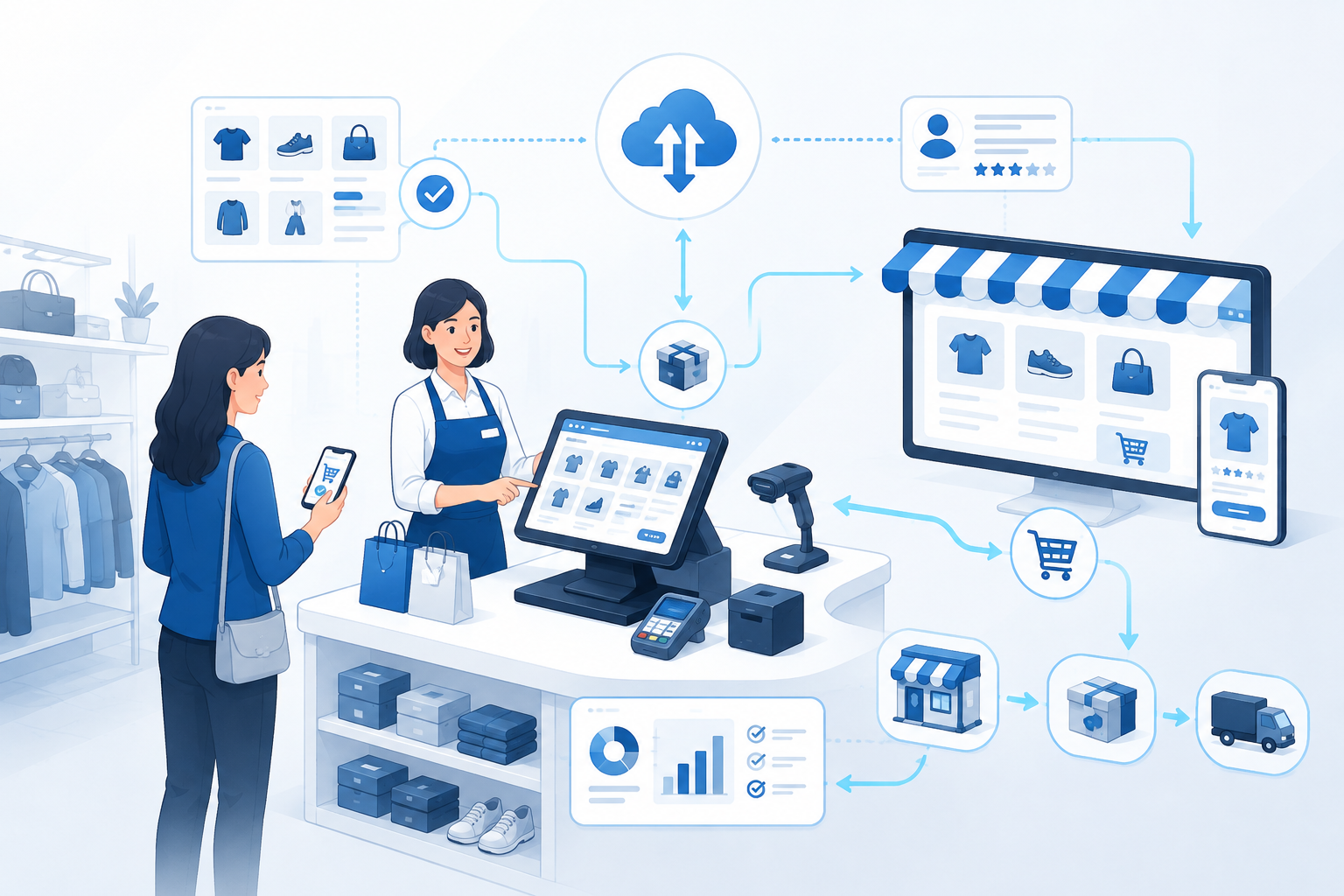
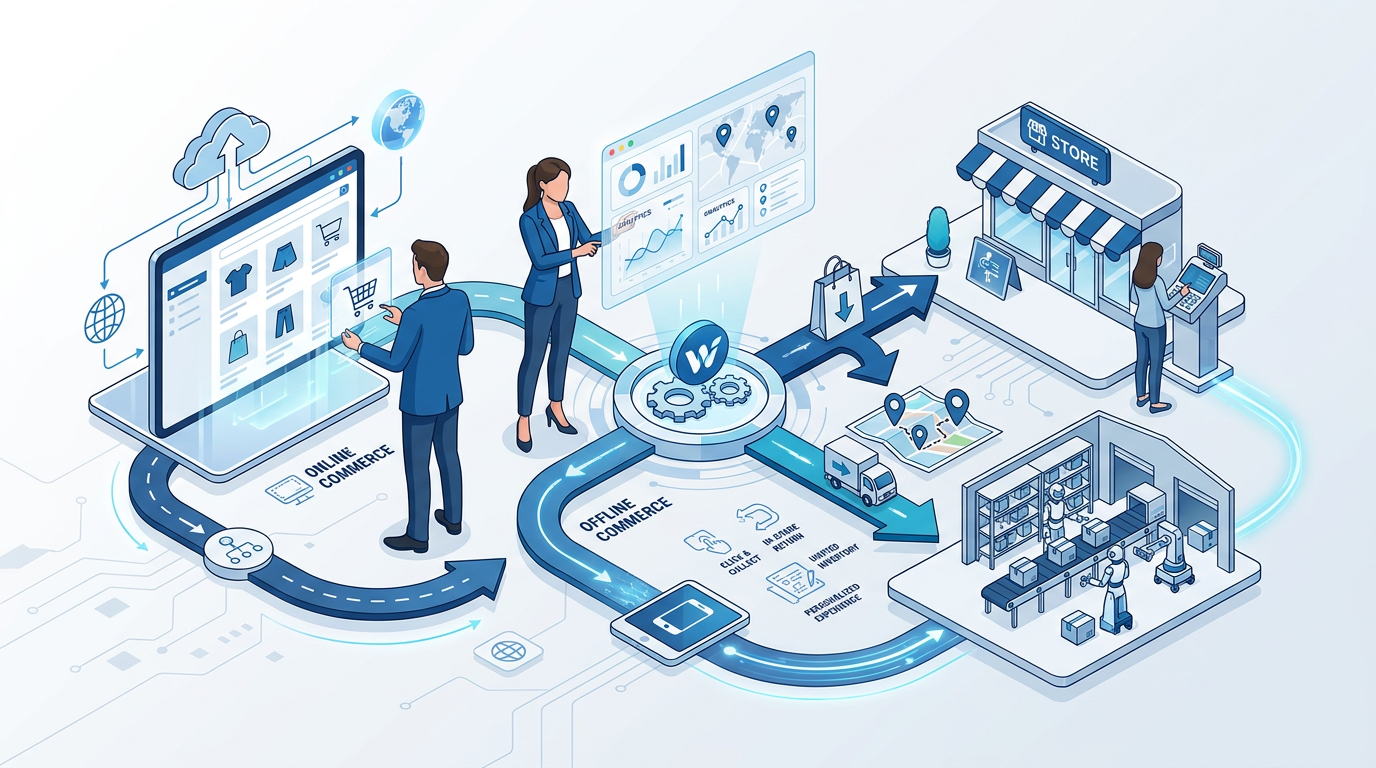
Physical stores may handle pickup, exchange and return issues created online. This requires shared order information and compatible policies. Our guides to omnichannel retail and retail POS systems explain how store teams, orders and transaction records stay connected.
What an E-Commerce Contact Centre Needs
An e commerce contact centre coordinates customer conversations, queues, staff and quality controls. A contact centre may be internal, outsourced or shared between the business and a service provider.
The operating design should define:
- which channels enter the same queue;
- how customer identity is verified;
- which actions an agent can complete;
- which cases require approval or escalation;
- how commitments and deadlines are recorded;
- how quality and customer outcomes are reviewed;
- what happens during high demand or system failure.
The best channel mix depends on product complexity, urgency and support volume. Technical products may need specialist phone support, while repeat-order businesses may resolve more requests through self-service and messaging.
E-Commerce Customer Support Software
E-commerce customer support software normally combines ticket management, customer communication, order context, automation, reporting and agent permissions. Some products also provide chatbots, knowledge bases, workforce scheduling, call handling and quality review.
E-commerce customer software should connect conversations to commercial records instead of becoming another isolated inbox. The agent should be able to see the relevant order, shipping status and previous contact without copying large amounts of data into the ticket manually.
Software Selection Criteria
| Criterion | Question to Test | Warning Sign |
|---|---|---|
| Order context | Can the agent retrieve the correct order and item? | Staff search several systems for basic facts |
| Action control | Can roles limit refunds, edits and account changes? | Every agent has administrator-level access |
| Channel continuity | Can email, chat and phone contacts join one case? | The customer repeats the issue after switching channel |
| Automation | Can rules classify and route without hiding urgent cases? | Automation closes cases before resolution |
| Reporting | Can reports connect contact reason to product and order outcomes? | Only reply speed is measured |
| Portability | Can tickets, customer history and knowledge content be exported? | Critical service history is trapped in the platform |
| Resilience | What happens when the commerce or service platform is unavailable? | Agents cannot record commitments during outages |
The best e-commerce customer software is the smallest system that reliably supports required channels, actions and reporting. Buying a large feature package does not correct unclear policies, weak inventory data or missing escalation ownership.
Automation, Chatbots and AI Support
Automation is useful for classification, identity checks, status retrieval, standard instructions and case routing. It is less reliable when the case requires judgment, negotiation, safety review or interpretation of conflicting records.
A chatbot should disclose when the customer is interacting with automation and provide a clear escalation route. The system should transfer the conversation, collected details and attempted steps so the human agent does not restart the process.
Useful automation measures include:
- successful self-service completion;
- repeat contact within a defined period;
- transfer to human support;
- incorrect classification;
- cases reopened after automated closure;
- customer abandonment before resolution.
Automation should be evaluated by completed outcomes, not by the number of tickets it prevented from reaching an agent.
Service Metrics That Reflect Resolution
| Metric | What It Measures | Limitation |
|---|---|---|
| First response time | Delay before the first business reply | A quick acknowledgement may not solve anything |
| Resolution time | Time until the case reaches a defined outcome | Can be distorted by premature closure |
| First-contact resolution | Share solved without another contact | Not every complex case should be rushed |
| Repeat contact rate | Customers contacting again about the same issue | Requires reliable case linking |
| Reopen rate | Cases reopened after being marked solved | May reflect policy or system failure |
| Refund cycle time | Time from approved return or cancellation to refund completion | Payment-provider timing may be separate |
| Contact rate per order | Support demand relative to transaction volume | Needs classification by contact reason |
| Customer satisfaction | Customer assessment of the interaction | Response bias can distort the score |
Service reporting should connect operational metrics to repeat purchases, cancellations, refunds, chargebacks and product returns. The performance tracking framework explains why customer, order and financial records should be reconciled rather than forced into one dashboard.
Returns, Refunds and Delivery Commitments
Customer service policies must match applicable law and actual operations. Requirements differ by country, product and transaction type.
For many distance purchases in the European Union, consumers generally have a 14-day withdrawal period, subject to exceptions. In the United States, the FTC’s Mail, Internet, or Telephone Order Merchandise Rule requires sellers to have a reasonable basis for promised shipping times and, when shipping is delayed, obtain consent to the delay or provide a refund.
The support team should distinguish:
- order cancellation before fulfillment;
- withdrawal or change-of-mind return;
- faulty, damaged or incorrect goods;
- failed or delayed delivery;
- warranty or post-purchase service;
- payment reversal and chargeback.
These cases may have different evidence, deadlines, costs and inventory outcomes. A return authorization should not automatically classify the product as sellable, and a refund approval is not the same event as payment settlement.
Accessibility and Inclusive Support
Customer support must remain usable for customers with different abilities, devices and communication needs. WCAG 2.2 organizes web accessibility around content being perceivable, operable, understandable and robust.
Practical service considerations include:
- keyboard-accessible chat and self-service tools;
- clear labels and error messages;
- text alternatives for important non-text content;
- captions or transcripts where service content uses audio or video;
- enough time to complete forms and verification;
- an alternative when one channel is inaccessible.
Accessibility should be tested across the support journey, not only on the main website. A return portal or chat widget can block a customer even when the product page is accessible.
E-Commerce BPO and Outsourcing
E commerce BPO uses an external business-process provider to perform support or related operational work. E commerce outsourcing may cover contact handling, order enquiries, returns administration, moderation, data entry or back-office tasks.
When Outsourcing Can Work
- contact volume is predictable or seasonal;
- processes are documented and repeatable;
- the provider receives controlled access to accurate records;
- quality, escalation and security requirements are measurable;
- the retailer retains policy and customer-outcome ownership.
When Outsourcing Creates Risk
- product knowledge changes frequently;
- agents cannot complete actions and only forward messages;
- the contract rewards short handling time rather than resolution;
- customer data is copied into uncontrolled systems;
- no internal owner reviews recurring failure patterns.
An outsourced agent can handle the interaction, but the retailer remains responsible for the promise made to the customer. Contracts should define data access, retention, quality review, escalation, business continuity and exit procedures.
Practical Example: A Delayed Online Order
Consider a customer who ordered two clothing items for store pickup. The payment was captured, but one item cannot be located at the store.
Weak Process
The customer receives an automated ready message. Store staff discover the shortage at collection. The store cannot view the online payment, so the customer is told to email the website team. Email support asks for the order number again and promises a refund without recording a deadline.
Connected Process
The pickup workflow requires physical verification before the ready message is sent. When the item is missing, the case links the order, payment and reservation. The agent offers a transfer, substitution, partial pickup or cancellation based on inventory and policy. The selected action is recorded with an owner and deadline.
If the customer chooses cancellation, the inventory reservation is released, the refund is initiated against the original payment and the customer receives a clear confirmation. The missing-stock incident is classified for later inventory review.
The service improvement comes from connecting records and ownership, not from writing a friendlier apology.
Common Customer Service Failures
| Failure | Warning Sign | Customer Impact | Correction |
|---|---|---|---|
| Fast reply without resolution | Low first response time but high repeat contact | The customer receives acknowledgement, not help | Measure next action and resolution |
| Disconnected channels | Customers repeat information after transfer | Effort and frustration increase | Use shared cases and conversation history |
| Unclear ownership | Tickets move between teams without a deadline | No one completes the outcome | Assign one case owner and escalation rule |
| Policy not matched to systems | Agents promise actions they cannot complete | Commitments are missed | Test policy through real workflows |
| Automation hides exceptions | Cases close after sending a template | Complex issues remain unresolved | Track reopen and repeat-contact rates |
| Support data stays isolated | Repeated product problems never reach operations | The same failure continues | Link reasons to products, carriers and orders |
| Excessive access | All agents can view or change sensitive records | Privacy and fraud risk increase | Use role-based permissions and audits |
A 30-Day Service Improvement Plan
| Period | Primary Work | Expected Output |
|---|---|---|
| Days 1–7 | Classify contact reasons and map the customer journey | Top failure points and ownership gaps |
| Days 8–14 | Define case records, actions, deadlines and escalation | Service process and permission model |
| Days 15–21 | Test difficult orders, returns, refunds and outages | Evidence log and corrected workflows |
| Days 22–30 | Build reporting and review recurring causes | Baseline metrics and improvement priorities |
Frequently Asked Questions
What is e commerce customer service?
E commerce customer service is the process of helping online shoppers with product questions, orders, payments, delivery, returns, refunds and account issues. Effective service connects customer conversations with accurate business records and gives each case a clear action, owner and deadline.
What is the difference between customer service and customer support?
Customer service covers the broader commercial relationship before, during and after purchase. Customer support usually focuses on solving a specific product, technical or account problem. In e-commerce, the two functions often share the same software and teams.
Which support channels should an online store offer?
An online store should offer channels that match product complexity, customer urgency and support volume. Email and self-service suit routine cases, chat suits short purchase questions, and phone support suits complex or emotional problems. Customers also need a clear escalation route when automation fails.
What should e-commerce customer support software include?
E-commerce customer support software should combine conversations, customer identity, order context, staff permissions, case routing and reporting. The software should help agents complete approved actions and preserve history across channels rather than functioning only as a shared inbox.
How is e-commerce customer experience measured?
E-commerce customer experience should be measured with a combination of resolution time, repeat contact, reopen rate, satisfaction, cancellations, returns and repeat purchasing. A single survey score cannot show whether the business actually completed the customer’s requested outcome.
What is an e-commerce customer journey?
An e-commerce customer journey is the sequence of interactions from product discovery through checkout, fulfillment, support, return and repeat purchase. Journey mapping becomes operationally useful when every stage identifies customer questions, failure points, responsible systems and business owners.
Should an online retailer outsource customer service?
An online retailer can outsource repeatable support work when processes, permissions, quality standards and escalation rules are clear. Outsourcing is risky when agents lack product knowledge, cannot complete actions or are rewarded mainly for short handling time.
What is the most important customer service metric?
No single metric is sufficient. A practical default is resolved contact rate combined with repeat contact and customer outcome. This combination helps distinguish genuinely completed cases from tickets that were answered quickly and closed prematurely.
Final Summary
E-commerce customer service connects customer conversations with product, order, payment, fulfillment and policy records. The purpose is to reduce uncertainty, complete actions and recover trust when the normal online journey fails.
Strong e-commerce customer experience depends on more than friendly agents. It requires accurate source data, connected channels, accessible tools, controlled permissions, realistic policies and metrics that reward resolution rather than ticket closure.
Start by mapping the highest-volume customer journeys, assigning an owner to each exception and testing complete cases such as delayed delivery, partial return and failed refund. Choose software or outsourcing only after the service process is clear enough to measure.